[ Runtime Authority Governance ]
AuthrexSystems
Runtime authority governance for autonomous and AI-enabled systems.
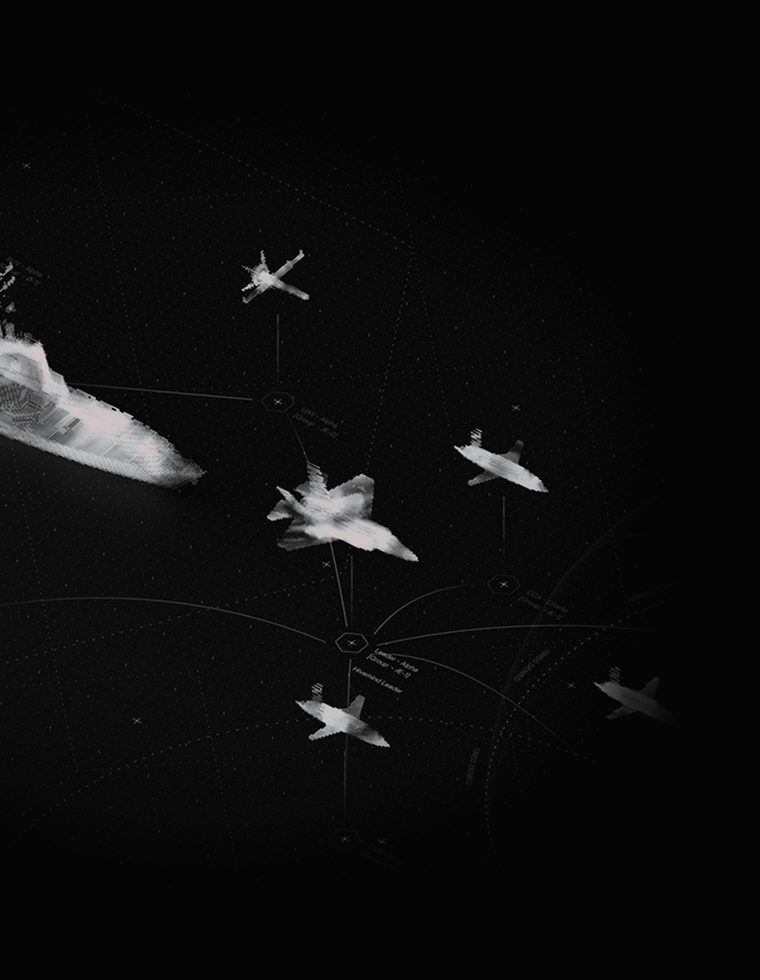

Autonomous aerial systems, engagement-authority coordination, and counter-UAS gating gated behind attested trust and human authority.
BLADE-EDGEBLADE-CUASBLADE-SWARM Explore the domain →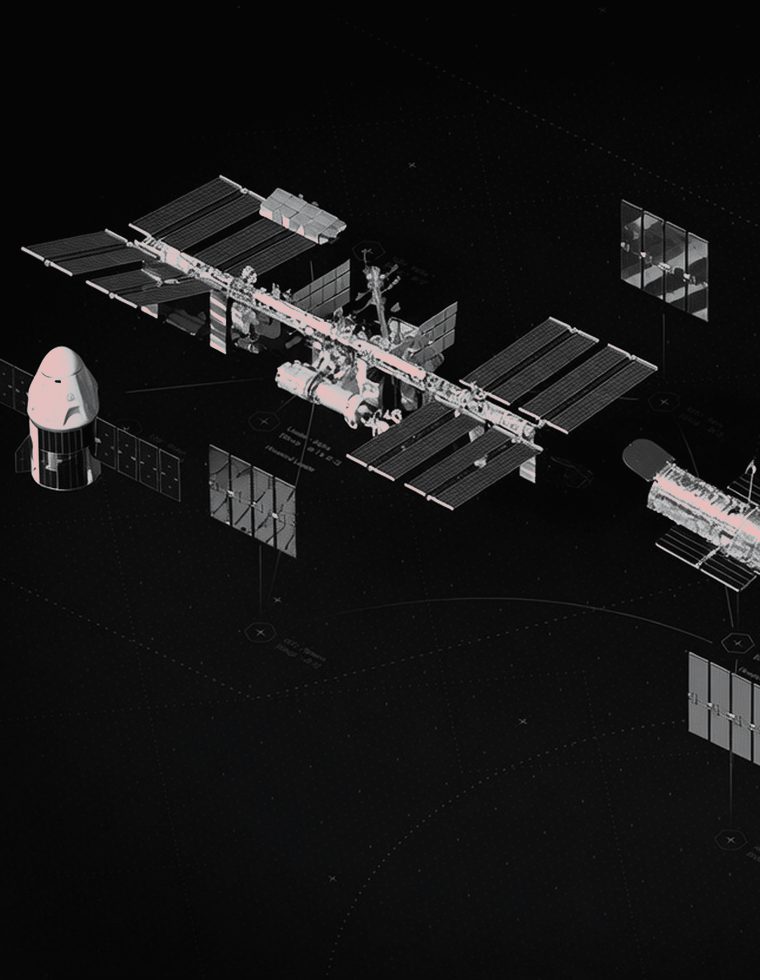

Governed deliberation before unplanned RPO maneuvers and constellation authority under contested comms.
BLADE-SPACE Explore the domain →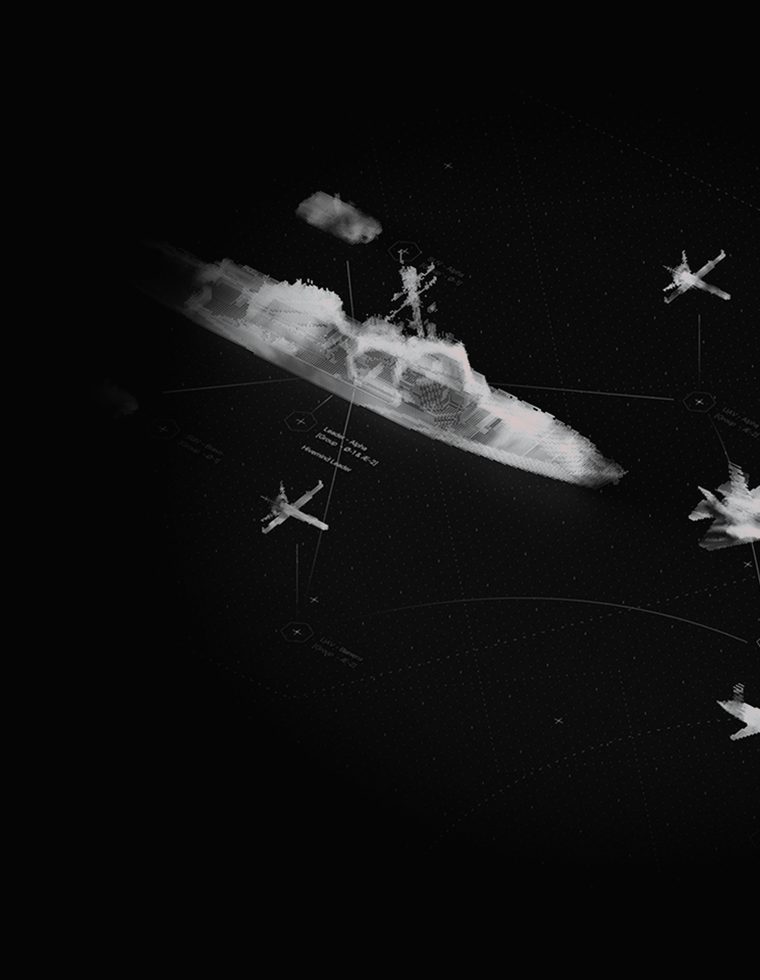

Surface patrol under GPS deception and UUV tier descent when the link drops. Governed fallback, not silence.
BLADE-MARITIME Explore the domain →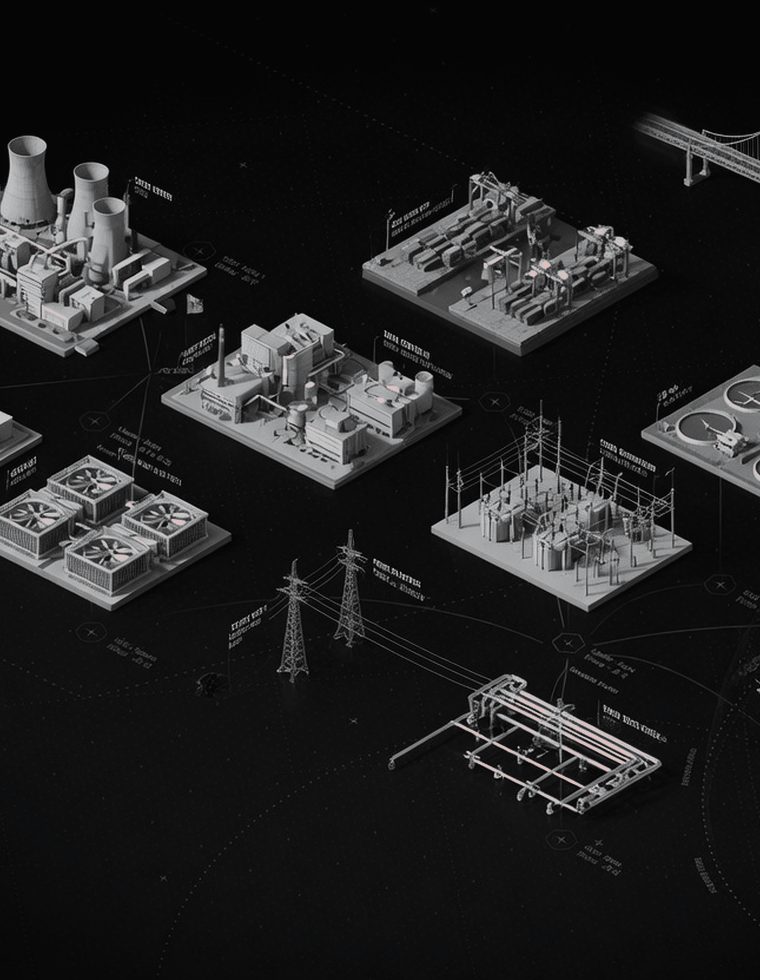

Command gating for grid and industrial OT: mandatory deliberation before automated load-shedding and control writes.
BLADE-INFRABLADE-INFRA-OT Explore the domain →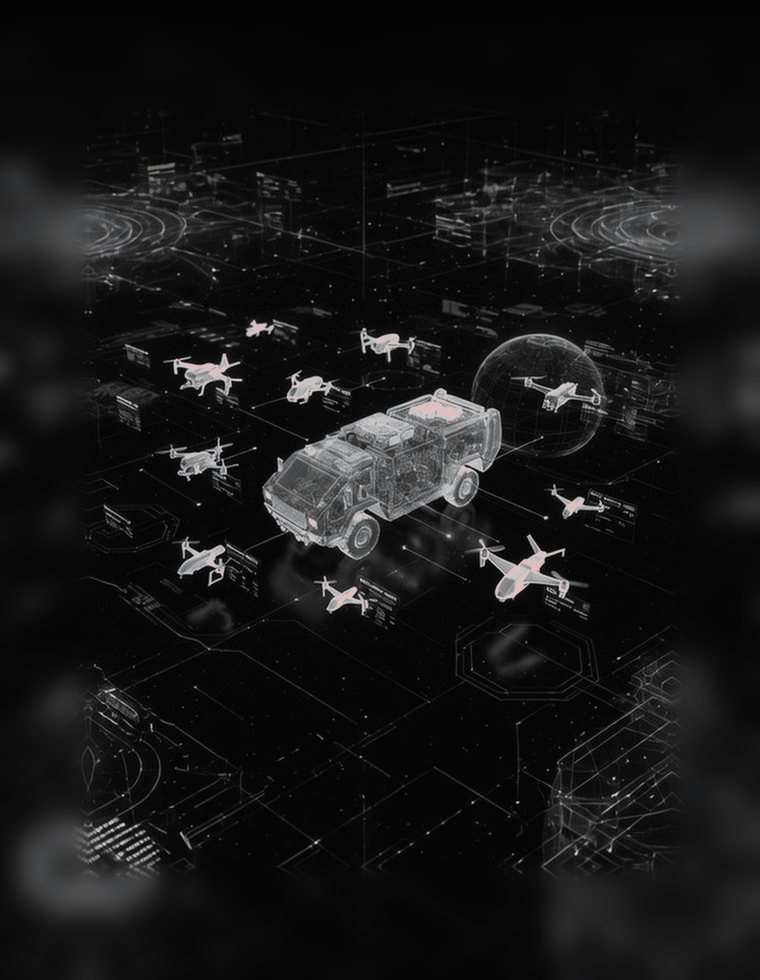

Authority handover engineered for the road: forced human override during sensor degradation, not silent drift.
BLADE-AV Explore the domain →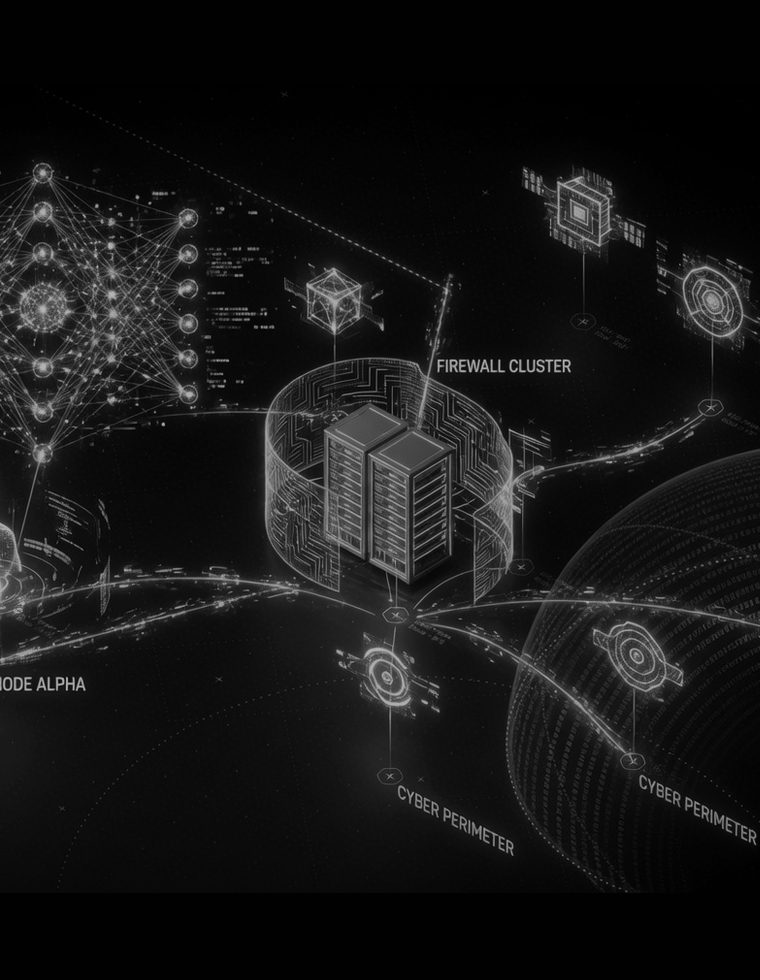

Hardware-anchored gating for coding agents and autonomous cyber defense. Privilege escalation and live-system patching held behind signed authority.
BLADE-AGENT-HSMAUTHREX-AGENT-CYBER Explore the domain →AUTHREX develops controls that narrow what an autonomous system or an AI agent is permitted to do when the evidence behind its decisions degrades, and that govern the conditions under which that permission is restored.
The practical problem: a system receives stale, conflicting, missing or untrusted evidence. A navigation fix disagrees with inertial sensing; an agent cannot verify a tool result; a link has gone quiet. Which actions remain permitted, which require a person's approval, which must be withheld, and what evidence is needed before the permissions return?The AI keeps the intelligence. People keep the authority.
The mechanism: each required source of evidence carries its own validity state, and the system may execute only what every required condition admits; a strong source never compensates for a failed one. When a condition fails, the set of permitted actions narrows at once. It widens only by authorization, on restored evidence or inside an envelope authorized in advance, never by a timeout. Where mission policy requires a person's confirmation before an irreversible action, the action waits for it; if confirmation does not come, the outcome declared in advance applies: delay, handoff or abort. Each release records its own decisions: the Governance Kernel writes signed, checkpointed audit evidence of the tool requests it gates and the approvals it routes, and the standalone consoles write replayable records of their simulated decisions; a record shows what was decided, not that a physical action occurred. The frameworks named on this site (SATA, HMAA, ADARA, MAIVA, FLAME, CARA and ERAM) are the stages specified to carry this out; the Governance Kernel release implements the agent tool workflow, and the other stages exist as specifications, models and consoles rather than as one integrated code release.
Each required source carries its own validity state. A GNSS fix that disagrees with inertial sensing, a camera reading that fails a consistency check, a tool result an agent cannot verify, a link that has gone quiet: a source that fails its check is treated as untrusted, and no other source compensates for it. The assessment is against the evidence the system can observe, not against ground truth.
Read More →The system may execute only what every required condition admits. Before a designated irreversible action a bounded deliberation window applies (the proposed FLAME mechanism), and where mission policy requires a person's confirmation the action waits for it; if confirmation does not come, the outcome declared in advance applies: delay, handoff or abort. A timeout never creates authority.
Read More →When a required condition fails, the permitted set narrows at once and may skip tiers. It widens only by authorization: stepwise, on restored evidence, after a hysteresis delay, or inside an envelope authorized in advance. Recovery of a sensor alone never restores authority. In the seeded consoles the record of every transition can be replayed against the frozen configuration.
Read More →Autonomous systems are making decisions faster than humans can supervise. The industry is optimizing for intelligence while the governance layer remains absent.
Without structured authority governance, systems operate with unconstrained delegation. No mechanism for degrading authority when trust erodes, no protocol for recovering control when autonomy fails.AUTHREX addresses this as an engineering problem, not a policy aspiration.
Three approaches to autonomous safety have shaped the field. AUTHREX adopts what works in each, and adds the missing layer: the system reasoning, in real time, about whether its own inputs and decisions can be trusted.
Three identical sensors, take the majority. Three identical computers, vote on the answer. Used in commercial aviation since the 1970s.
All three sensors can be wrong the same way. Cosmic rays, GPS spoofing, glare. Identical voters share identical blind spots.
Watch the autonomous system. If it leaves a monitored state envelope, revert to a verified safety controller. Simplex (Sha 2001), system-level Simplex (Bak et al. 2009) and ASTM F3269. Used in aerospace.
The monitor acts on plant state against a known safe envelope, not on whether the inputs deserve belief: a spoofed position that stays inside the envelope gives it nothing to act on. The switch is between two controllers; the authority the system holds is not graded.
Different sensor modalities (camera, radar, GNSS, inertial, celestial). A validity state per source. Authority narrows at once when a required condition fails and widens only by authorization, with a specified recovery path when evidence returns.
The layer reasons about its own inputs. Authority is graded across four tiers, not a single switch. The fallback is specified in advance, not improvised.
AUTHREX does not replace redundancy or RTA. It composes with both, and it inherits from system-level Simplex the placement of the gate on separate hardware. The contribution claimed is confined to what the gate computes: authority as a graded, evidence-conditioned lifecycle that narrows at once and widens only by authorization, rather than a single switch held by either the autonomous system or the safety override. The named comparators and configurations are in the Program Answers and on the Engineering Basis page.
Each case is drawn from an artifact at its demonstrated maturity. Neither has been run with a sponsor; the acceptance criteria would be agreed before any test.
An agent proposes tool calls through an MCP proxy. The Governance Kernel assigns an authority tier, gates every request by tier before any tool executes, routes requests that exceed the tier to a human approval queue, and writes signed, checkpointed audit evidence. Demonstrated today: MCP SDK governance on loopback with synthetic data, package v1.0-QA10. The AUTHREX-AGENT console shows the same ladder, T3 full autonomy to T0 full lockout.
A scoped evaluation would run a sponsor-defined tool catalog against agreed criteria, with adverse cases: a stale or replayed approval, a policy change during approval, a restart, and a ledger failure.
Kernel validation status →A fault demands safing. The AUTHREX-SAFING governor adjudicates entry to a safe state, holds and deepens it while the fault persists, and permits exit only under an authorized re-arm with human approval; every decision is ledgered and the run replays from its seed. Demonstrated today: the released v1.5.0 console and its verification record (1,061 checks, 50 of 50 mandatory mutants killed).
A scoped evaluation would run sponsor-defined fault scenarios on the seeded console, including false safing demands and an interrupted recovery. Physical recovery behavior is outside what this release can show.
AUTHREX-SAFING →The seven-stage pipeline instantiated as a software shim around LLM-based agents. No FPGA, no model retraining. Aligned with the CISA + NSA + Five Eyes agentic-AI guidance of May 2026.
Learn More →Pre-deployment authority governance. Evaluates configured evidence conditions and records an internal release or hold recommendation; deployment decisions remain external to AUTHREX. Mapped by the author to the March 2026 White House cyber strategy (President Trump’s Cyber Strategy for America) and NDAA §1533.
Learn More →OT authority governance for critical infrastructure. Authorizes the deterministic safety logic for AI in OT; never makes the safety decision itself. Anchored to the CISA/NSA AI-in-OT principles.
Learn More →Governs whether an autonomous cyber-reasoning system may patch a live controller. DARPA AIxCC lineage. Governance only, no offensive function.
Learn More →Signal delay removes the human from the loop, so authority is governed onboard. Anchored to NASA SBIR EXPAND.3.S26B and Space Policy Directive 5.
Learn More →Governs the test environment itself so evaluation is bounded, audited, and reversible. Matches NDAA §1534. Feeds ASSURE downstream.
Learn More →Agent swarm containment prototype, release 2.2.5. Eight governed agents at T2 inside one authority boundary; a modeled host gate denies an out-of-grant action before execution, and containment is confirmed by three witness ballots and five isolation planes. Synthetic data, no enforcement, not one of the six application profiles.
Learn More →Cited Variants · folded into AGENT-CYBER
AUTHREX-ZTAGENT Zero Trust for autonomous agents. The same agentic surface, not a separate application.
AUTHREX-MCPGOV Model Context Protocol server governance. Folded into AGENT-CYBER as a citation layer.
Features · not applications
AUTHREX-PQC Post-quantum-ready signing, a property of how BLADE-AGENT-HSM signs. A hardware feature.
AUTHREX-AISBOM An AI software bill of materials the ERAM ledger emits. A ledger feature.
Between 1983 and 2026, documented incidents involving misidentification, sensor-trust collapse, rushed escalation, and coordination failures have caused hundreds of casualties.
AUTHREX is designed to reduce the probability of exactly these classes of failures.
Systems classify friendly or civilian assets as hostile despite ambiguity.
Navigation or target evaluation accepts false data without cross-validation.
Ambiguous events trigger rapid authority decisions before verification.
Multiple nodes fail to maintain consistent identification or authority.
Systems maintain authority after trust degrades below safe thresholds.
| SATA | HMAA | ADARA | MAIVA | FLAME | CARA | ERAM | Adv. Level | |
|---|---|---|---|---|---|---|---|---|
| GPS/GNSS Spoofing | ● | · | ● | · | · | ● | ● | State / Sophisticated |
| Electronic Warfare (EW) | ● | · | ● | · | ● | ● | ● | State |
| Byzantine Node Compromise | ● | · | ◐ | ● | ◐ | · | ● | Advanced Persistent |
| Sensor Degradation (Environmental) | ● | ● | · | · | ● | ● | ◐ | Environmental |
| SCADA Command Injection | ● | ● | ● | · | ● | ● | · | Sophisticated |
| IFF System Failure | ● | ● | ◐ | ● | ● | ◐ | ● | System / Environmental |
| Coordinated Multi-Vector | ● | ● | ● | ● | ● | ● | ● | State (Full Spectrum) |
● = primary defense ◐ = contributing defense Adversary capability: sophistication level required to execute threat class.
| Year | Incident | Failure Mode | Frameworks | Align | Source |
|---|---|---|---|---|---|
| 1983 | Soviet Nuclear False Alarm | Single-sensor false warning; near-nuclear escalation | ERAM, FLAME, SATA | ● HIGH | NSA Archive |
| 1988 | Iran Air Flight 655 | Track misidentification; compressed timeline | SATA, HMAA, ADARA, FLAME | ● HIGH | ICAO / DoD Vincennes Report |
| 1994 | Black Hawk Friendly Fire | IFF failure; coordination breakdown | SATA, HMAA, MAIVA, ERAM | ○ MED | GAO OSI-98-4 |
| 2003 | Patriot Fratricides (OIF) | Automated engagement under IFF jamming | SATA, HMAA, FLAME, ERAM | ● HIGH | DSB ADA435837 |
| 2015 | Kunduz Hospital Strike | Targeting breakdown; communication failures | SATA, HMAA, FLAME, CARA | ○ MED | DoD AR 15-6 / MSF |
| 2020 | PS752 Shootdown | Radar misID; no approval gate | SATA, FLAME, ERAM, CARA | ● HIGH | ICAO Final Report |
| 2021 | Kabul Drone Strike | Wrong threat assessment; civilian casualties | SATA, ADARA, HMAA, FLAME | ● HIGH | DoD AR 15-6 |
| 2021 | Colonial Pipeline Ransomware | Credential compromise; no IT/OT segmentation; full OT shutdown as safe fallback | SATA, HMAA, CARA, ERAM | ● HIGH | CISA / FBI Joint Advisory |
| 2022 | Przewodów Missile | Ambiguous cross-border; flash-escalation | ERAM, FLAME | ○ MED | NATO / AP Investigation |
| 2024 | WCK Convoy Strike | Procedural breach; mistaken ID of aid vehicles | SATA, HMAA, ADARA, FLAME | ● HIGH | IDF Investigation |
| 2024 | MV Dali Key Bridge Allision | Power blackout cascade; auto-restart failed; no safe fallback before bridge strike | SATA, CARA, FLAME, ERAM | ○ MED | NTSB Final Report |
| 2024 | Tesla Autopilot NHTSA Recall | ODI reviewed 956 crashes, trends in 467; 211 frontal-plane crashes, 13 fatal, 14 deaths; authority handover gap | SATA, HMAA, CARA, ERAM | ● HIGH | NHTSA EA22002 Closed |
| 2024 | Red Sea F/A-18 Friendly Fire | USS Gettysburg misidentified returning aircraft | SATA, HMAA, MAIVA, ERAM | ● HIGH | CENTCOM Statement |
| 2024 | Azerbaijan Airlines J2-8243 | Russian Pantsir-S1 misidentified E190 as drone under GPS jamming; 38 killed | SATA, HMAA, ADARA, FLAME | ● HIGH | Azerbaijan Gov / Russian MoD |
| 2025 | Large-Scale GNSS Spoofing | Widespread GPS interference; navigation collapse | SATA, ADARA, CARA | ○ MED | CNAS / Eurocontrol Reports |
| 2025 | JetBlue A320 ELAC Bit-Flip | Cosmic ray SEU corrupted flight control computer; 6,000-aircraft Airbus recall | SATA, MAIVA, CARA, FLAME | ○ MED | Airbus Service Bulletin / FAA AD |
| 2026 | Kuwait F-15 Fratricide | Kuwaiti air defenses shot down three U.S. F-15Es during active combat with Iran | SATA, HMAA, MAIVA, ERAM | ● HIGH | CENTCOM 2 Mar 2026 |
Sources: CENTCOM, ICAO, GAO, NTSB, NHTSA, FAA, CISA, CNAS, DoD investigations. All publicly documented. ALIGN = framework alignment to documented failure mode (HIGH = strong match to 3+ frameworks; MED = partial match).
Documented autonomy failures often follow recurring authority-control patterns. AUTHREX maps six recurring failure classes to combinations of proposed governance functions intended for evaluation as detection, authority-reduction, recovery, or evidence mechanisms. Historical incidents illustrate problem classes only; no counterfactual claim is made that AUTHREX would have prevented a particular event.
Effectors, vehicles, or actuators take consequential action on corrupted, spoofed, or incomplete sensor data. Historically the single largest category of fratricide and civilian-harm incidents.
Automated engagement chains compress decision timelines below the threshold at which meaningful human judgment or cross-check is possible. Risk compounds in multi-agent and swarm contexts.
Systems retain full operational authority even as their epistemic foundations collapse, no graceful degradation, no automatic authority reduction under trust decay. The default bias is optimism rather than caution.
Multiple autonomous agents or redundant computers reach incompatible conclusions and act on them. Without fault-tolerant voting, a single compromised node can cascade into systemic failure.
Systems execute irreversible actions before confidence thresholds are met, without a deliberation window, and without a forced pause for evidence review. Particularly acute under hardware-level radiation or jamming.
Adversarial jamming, spoofing, ransomware, or physical environment effects (cosmic particle SEUs, electronic warfare) corrupt the inputs or control infrastructure the autonomous system depends on.
Publicly documented incidents globally across three governance-relevant categories. Counts are lower-bound estimates derived from NHTSA SGO reports, CSIS Significant Cyber Incidents database, ICAO/ASN aviation records, and national investigation releases (GAO, NTSB, DSB, NATO). The upward trend reflects both rising deployment of autonomous and automated systems and improved incident reporting infrastructure after 2021.
Fratricides, shootdowns, misidentifications. Sources: CENTCOM, ICAO, GAO, DSB, NATO. Typically 1-4 publicly documented events per year; spikes during active combat operations.
ADAS and ADS crashes reported under NHTSA Standing General Order (2021-01). Pre-2021 figures reflect limited systematic reporting. Cumulative ~3,200 crashes reported by Mar 2025.
Significant ICS/SCADA and critical-infrastructure cyber incidents with operational impact. Source: CSIS Significant Cyber Incidents database, EuRepoC, CISA advisories.
METHODOLOGY NOTE
Counts are conservative lower-bound estimates derived from publicly available datasets. No single authoritative global registry of authority-governance failures exists. Reporting infrastructure improved markedly after 2021 (NHTSA Standing General Order, CISA Joint Cybersecurity Advisories, CSIS tracker expansion), so pre-2021 counts in the autonomous and cyber categories are under-represented relative to actual incident rates. The automated-weapons category reflects only publicly disclosed military investigations. These numbers establish a trend, not an absolute count. Individual cases are detailed in the Documented Authority Governance Failures table above.
Authority governance failures are not abstractions. Below, six publicly documented price tags: aircraft, infrastructure, fleets, and lives, each traceable to a failure class AUTHREX is engineered to govern.
Three F-15E Strike Eagles, Kuwait fratricide, Mar 2026. Inflation-adjusted flyaway cost; replacement cost substantially higher.
Iran Air 655 (290, 1988) and PS752 (176, 2020). Both radar misidentification under time pressure.
MV Dali, Francis Scott Key Bridge, 2024. Power blackout cascade with no safe fallback. State of Maryland estimate.
Colonial Pipeline, 2021. Roughly 45% of East Coast fuel; full OT shutdown was the only safe fallback available.
Tesla Autopilot, NHTSA EA22002, 2024. ODI reviewed 956 reported crashes, identified trends in 467 after exclusions; 211 frontal-plane crashes involved 13 fatal crashes and 14 deaths.
Black Hawk friendly fire, 1994. Two helicopters downed by F-15s under AWACS control. GAO OSI-98-4.
Every DARPA program is evaluated against the Heilmeier Catechism, eight questions developed by former DARPA Director George Heilmeier that cut through jargon and force the proposer to explain the what, the why, and the so-what in plain language. Here are our answers for AUTHREX.
We are building a safety layer for autonomous systems. When an AI-controlled system, a self-driving car, an aircraft, a ship, a power grid controller, is about to do something unsafe, our proposed layer is intended to detect the configured error condition, pause the action, reduce the AI's authority, and hand control back to a human.
We are building a safety layer for autonomous systems. When an AI-controlled system, a self-driving car, an aircraft, a ship, a power grid controller, is about to do something unsafe, our proposed layer is intended to detect the configured error condition, pause the action, reduce the AI's authority, and hand control back to a human.
Today, safety for autonomous systems is handled three ways: (1) testing to try to catch every failure case before deployment (impossible in the real world), (2) watchdogs that shut everything off when something looks wrong (expensive, kills productivity), or (3) rule-based safety rails that only work for the situations someone thought to write rules for.
None of these handle the real problem: AI systems are asked to act on sensor data that might be wrong, at speeds where humans cannot supervise every decision, in environments where an adversary may be actively lying to the system. The result is that when something goes wrong, there is no graceful path back to human control.
What is new: AUTHREX is an integrated authority-lifecycle framework that treats authority itself as an engineered lifecycle, proposed as a runtime authority lifecycle informed by sensor trust, represented through selected formal models, and designed for possible enforcement at software, trusted-execution, or hardware boundaries. Instead of building more rules on top of the AI, the program proposes and internally tests components of a governance layer intended to sit between autonomous decision logic and registered action interfaces; physical actuator-boundary enforcement has not been demonstrated.
Why it will succeed: Selected authority-state and consensus components are represented through mathematical models and model checking; other components remain simulated, specified, or proposed. Sensor trust uses Dempster-Shafer evidence theory. Multi-agent agreement uses Byzantine fault tolerance. Authority state machines are model-checked in TLA+; the reported analysis explored 23,748 distinct reachable states at depth 9 (26,397,356 states generated); the result describes the discrete authority automaton under the assumption that instantaneous authority equals its target and does not cover continuous behavior between decision instants. Of 8 stated properties, 5 invariants and 1 liveness property held and 2 properties are vacuous at this bound (one upgrade-path, one trust-authority consistency, TrustAuthorityWeakConsistency). The same authority-governance pattern has been mapped through simulations and reference designs to several domains; cross-domain physical integration has not been demonstrated.
Defense: The DoD Replicator Initiative and the Collaborative Combat Aircraft program are fielding autonomous systems faster than they can be supervised. AUTHREX is intended to provide an evaluable governance architecture for bounding delegated machine authority; the boundaries are designed for hardware-bound enforcement in the proposed architecture (no built hardware yet).
Commercial automotive: The 467 trend-linked crashes and 14 deaths documented in NHTSA EA22002 are not a Tesla-specific problem; they illustrate recurring authority, monitoring, and intervention risks that other ADAS and ADS programs may also need to address. AUTHREX proposes one governance architecture for evaluating those risks.
Critical infrastructure: Colonial Pipeline, Ukraine grid, and dozens of other industrial control system compromises force operators to choose between contaminated operation and full shutdown. AUTHREX proposes staged authority reduction and recovery mechanisms intended for evaluation in scenarios where operators seek to preserve selected critical functions while containing suspected compromise. This capability has not been demonstrated on operational infrastructure.
Technical risk: Moving governance to the hardware boundary requires FPGA or ASIC integration at the actuator level. FPGA-based enforcement is a proposed development path; no independently reviewed FPGA implementation or live-silicon test result is claimed. This is where SBIR Phase II funding would validate the design.
Adoption risk: Integrators may resist adding a layer between their AI and their actuators. The counter is that AUTHREX makes AI systems more evaluable: the architecture may support clearer assurance evidence and authority boundaries, but any effect on legal, certification, accreditation, or acquisition risk would require program-specific assessment.
Adversarial risk: An adversary who understands AUTHREX may try to manipulate the sensor trust calculus or the authority handoff conditions. We address this through ADARA (adversarial deception-aware reasoning, a deception prior that can only lower authority) but require red-team evaluation, which is part of the development roadmap.
Engineering foundation documented as of October 5, 2026 (internally funded): a public corpus of Zenodo deposits, SSRN working papers, technical reference works, and four peer-reviewed journal articles, three of them bearing on this work (Journal of Hardware and Systems Security and Digital War, both Springer Nature, 2026, and The ITEA Journal of Test and Evaluation, 2026); 7 governance frameworks; 8 reported U.S. provisional patent applications (unexamined); 25 catalogued browser simulations; 12 hardware reference designs, 10 BLADE platforms plus rover and UAV testbeds (BOM-specified, $199 to $505K per design).
Phase I (SBIR, ~$300K over 6 months): FPGA bitstream commissioning on a Zynq UltraScale+ development board. Hardware-in-the-loop validation of the SATA-FLAME pipeline. Red-team evaluation on the Rover testbed.
Phase II (SBIR, ~$2M over 24 months): Full BLADE platform integration, one defense domain (suggested: BLADE-EDGE directed energy or BLADE-AV autonomous ground). Independent verification campaign (planned). TRL 4 to TRL 6 target.
Completed as of October 5, 2026: engineering foundation documented. All 7 frameworks published, 12 hardware reference designs specified, 10 BLADE platforms plus rover and UAV testbeds, 8 U.S. provisional patent applications reported as filed.
Q4 2026 (planned or in progress): Priority for the next campaign is one demonstrator, not more frameworks: SATA, HMAA and CARA on a single ROS 2 platform, evaluated against the baselines and metrics fixed in the evaluation protocol. The remaining frameworks are out of scope for that demonstrator. BLADE-EDGE prototype assembly · FPGA enforcement-path RTL development (proposed; no reviewed implementation claimed) · UAV testbed flight validation · Nonprovisional filing decisions, pending owner and counsel, for the eight applications.
Q1-Q2 2027: SATA-FLAME on FPGA (TRL 4 to 5 target) · SBIR Phase II submission · BLADE-MARITIME hardware integration · Rover testbed governance validation campaign.
Q3 2027+: TRL 6 target across multi-framework governance on physical hardware · Potential later nonprovisional filings claiming benefit of the provisional applications, subject to applicable requirements and counsel advice · Evaluation partnership or CRADA engagement (planned) · BLADE-AV autonomous vehicle integration testing.
Mid-term exam (Phase I end, ~12 months): SATA-FLAME pipeline running on FPGA hardware. Red-team evaluation under six attack vectors (sensor spoofing, authority hijack, Byzantine node compromise, jamming, credential theft, physical tampering). Proof of proposed enforcement options (software mediation, protected key storage, trusted execution, hardware-bound interlocks), none yet demonstrated as an independently evaluated, bypass-resistant physical implementation.
Final exam (Phase II end, ~36 months): Full BLADE platform, one defense and one civilian domain, demonstrated under independent evaluation. Success = the governance layer correctly prevents action in adversarial or low-trust scenarios AND correctly allows action in nominal scenarios, measured against defined thresholds.
Commercial exam: One OEM adoption in automotive ADAS or maritime USV, with measurable reduction in false-positive disengagement and false-negative incident rate. Future independent safety and assurance evaluation would require domain-specific processes, evidence, and qualified assessors (candidate mappings include ISO 26262 and MIL-STD-882E system-safety processes); no certification or approval is currently claimed.
Also: the capability brief (Sep 2026 edition) · the V6.1 catalog family · working with AUTHREX
AUTHREX SYSTEMS LLC exists because the gap between autonomous capability and authority governance is widening. Current approaches treat control as a policy overlay. AUTHREX treats it as an engineering problem.
The governance architecture provides the operational mechanisms for assigning, monitoring, degrading, revoking, and recovering authority in high-speed autonomous environments. This is not AI safety in the abstract. This is control engineering for real systems operating under real constraints. The same proposed authority-governance pattern is mapped to both defense-relevant and commercial high-liability scenarios. Cross-domain physical effectiveness has not been demonstrated.